

In this article
- Sofia to Plovdiv by car: quick answer
- Best Sofia to Plovdiv route: the A1 Trakia motorway
- Sofia to Plovdiv travel time: what to expect
- Do you need a Bulgaria vignette for a rental car?
- What is the A1 motorway like to drive?
- Driving rules to remember in Bulgaria
- Renting a car for the Sofia to Plovdiv drive
- Parking in Plovdiv after the drive
- Is Sofia to Plovdiv a good day trip by car?
- Useful stops and detours on the way
- Winter and bad-weather tips
- Before you leave Sofia: quick checklist
- FAQ
Driving from Sofia to Plovdiv by car is one of the easiest intercity trips in Bulgaria. The fastest route is the A1 Trakia motorway, and the journey usually takes about 1 hour 30 minutes to 2 hours, depending on where you start in Sofia and traffic at each end.
The drive from Sofia to Plovdiv is straightforward enough for visitors renting a car for the first time in Bulgaria, but there are a few details worth checking before you leave: the electronic vignette, motorway driving rules, parking in Plovdiv, and the best exit for your final address.
Sofia to Plovdiv by car: quick answer
The standard Sofia to Plovdiv route is:
- Leave Sofia towards the east or south-east.
- Follow signs for A1 / Trakia / Plovdiv / Burgas.
- Continue on the A1 motorway across the Sofia Plain and towards Plovdiv.
- Take the appropriate signed exit for Plovdiv, depending on your destination in the city.
For most travellers, the key facts are:
- Distance: roughly 145 km between central Sofia and central Plovdiv, depending on your exact start and end point.
- Typical travel time: around 1 hour 30 minutes to 2 hours in normal conditions.
- Main road: A1 Trakia motorway.
- Tolls: no cash toll booths on this route for ordinary cars, but a valid Bulgarian e-vignette is required for the national road network.
- Driving side: right-hand side of the road.
If you are arranging a rental before the trip, you can compare options for car hire in Sofia or pick up directly after landing with Sofia Airport car hire.
Best Sofia to Plovdiv route: the A1 Trakia motorway
The A1 Trakia motorway is the best route for almost every Sofia to Plovdiv journey. It is faster, simpler and more predictable than older parallel roads through towns and villages.
From central Sofia, your navigation will normally take you east via major boulevards and then onto the A1. From Sofia Airport, the route is also simple: you head towards the city’s eastern road network and follow motorway signs for Plovdiv and Burgas.
Once you are on the A1, the route is direct. The road runs east from Sofia, passes the Ihtiman area and continues towards Pazardzhik and Plovdiv. You do not need to drive through smaller towns unless you choose to stop or take a detour.
Approaching Plovdiv, follow your navigation carefully rather than just taking the first exit that says Plovdiv. The city is spread out, and the best exit depends on whether you are heading to the centre, the Old Town, a hotel in the north, the south of the city or an industrial area outside town.
Sofia to Plovdiv travel time: what to expect
The Sofia to Plovdiv travel time is usually 1 hour 30 minutes to 2 hours in good weather and normal traffic. The motorway section is quick, but the total time depends heavily on Sofia traffic when you leave and Plovdiv traffic when you arrive.
Allow extra time if you are starting from central Sofia during the morning or evening rush hour. Getting across Sofia and onto the motorway can take longer than expected, especially on weekdays.
Friday afternoons, holiday periods and long weekends can also add delays. Many drivers leave Sofia for other parts of Bulgaria at similar times, so traffic can build up on the eastern exits from the city and at busy service areas.
In winter, fog, ice or snow can slow the route, especially around higher or more exposed sections near Sofia and Ihtiman. The motorway is an important national road, but conditions can still change quickly in cold weather.
Do you need a Bulgaria vignette for a rental car?
Yes, cars using Bulgarian motorways and most national roads need a valid electronic vignette. For the Sofia to Plovdiv route, this matters because the A1 Trakia motorway is part of the vignette road network.
For a rental car, the most important point is to check whether the vignette is already included and active for that specific number plate. In Bulgaria, the vignette is electronic and linked to the vehicle registration number; there is no paper sticker to display on the windscreen.
Many rental cars registered in Bulgaria already have a vignette, but you should never assume. Before leaving Sofia, ask the rental provider to confirm that the vehicle has a valid vignette for the full rental period. If it is not included, buy one through an official sales channel before you use the motorway.
When checking a Bulgaria vignette for rental car use, make sure:
- the vignette is valid for the vehicle’s exact registration number;
- the validity period covers your full trip;
- the country code and number plate have been entered correctly;
- you keep any confirmation or receipt if you buy one yourself.
Do not confuse the vignette with a parking ticket or city access charge. It is a road-use requirement for the national road network, including the A1 motorway between Sofia and Plovdiv.
What is the A1 motorway like to drive?
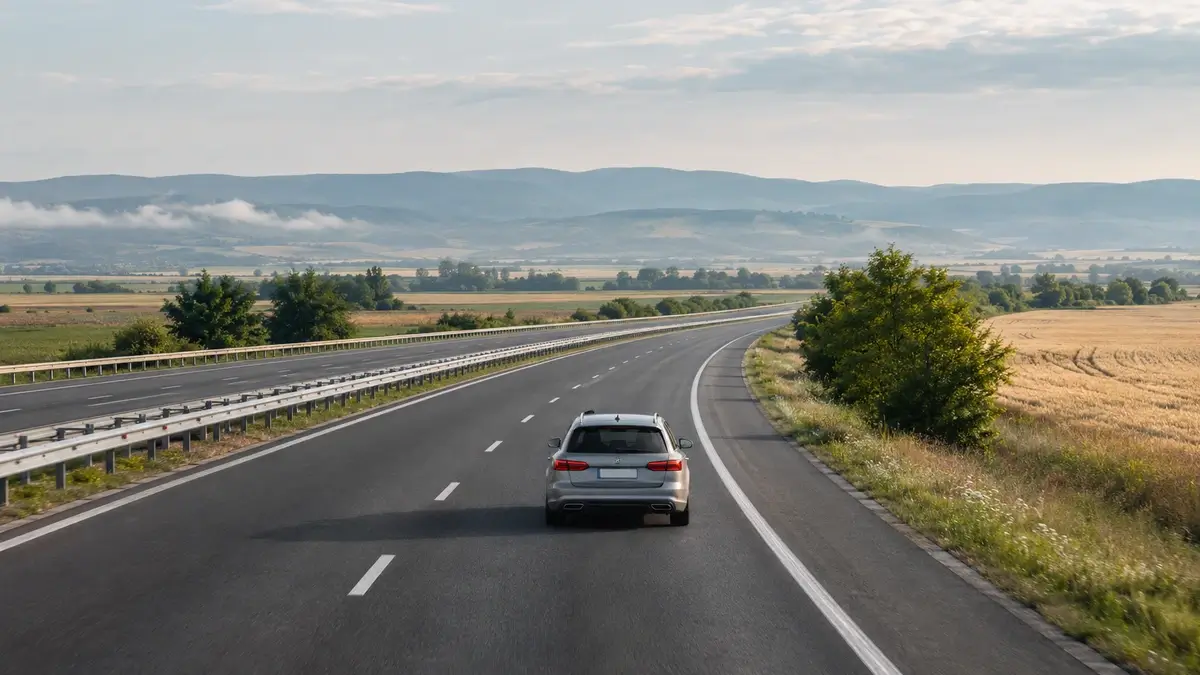
The A1 is a normal multi-lane motorway and is generally the most comfortable road between Sofia and Plovdiv. Expect fast-moving traffic, lorries, coaches and local drivers who know the route well.
Keep to the right lane unless overtaking, use mirrors carefully and move back to the right after passing. Some drivers approach quickly from behind in the overtaking lane, so check twice before pulling out.
Roadworks can appear on sections of the motorway, and lane closures may not always match what your navigation app expects. Follow temporary signs and speed restrictions. If the road surface changes or lanes narrow, reduce speed early rather than making a last-minute correction.
There are service stations along and near the route for fuel, toilets, coffee and snacks. If you are making the trip as a day return, it is still worth starting with a comfortable fuel level so you are not forced to stop at an inconvenient moment.
Driving rules to remember in Bulgaria
Bulgaria drives on the right, and road signs use standard European-style symbols. On major routes such as the A1, destination signs often include both Bulgarian Cyrillic and Latin transliteration, especially for major cities like Sofia and Plovdiv.
For ordinary cars, the usual speed limits are 50 km/h in built-up areas, 90 km/h outside built-up areas, 120 km/h on express roads and 140 km/h on motorways, unless signs show a different limit. Always follow the posted signs, as temporary limits may apply around roadworks, junctions and weather-affected sections.
Dipped headlights are required during the day in Bulgaria. Seat belts are compulsory, and children must use appropriate restraints. Mobile phone use while driving is not allowed unless you use a hands-free system.
Drink-driving rules are strict. If you are planning lunch, wine tourism or an evening in Plovdiv, choose a designated driver and avoid alcohol before driving back.
Renting a car for the Sofia to Plovdiv drive
If you rent with Rentiago in Bulgaria, the rental price includes full insurance, and no security damage deposit is blocked on your card. A refundable fuel deposit still applies: 75 EUR for Mini and Economy cars, and 100 EUR for all other categories; it is authorised on the customer’s card and released after return. Additional drivers can be added free of charge, airport pick-ups are handled by meet and greet at the terminal, and if you provide a flight number when booking, flight delays are monitored.
The rental fee is prepaid online, and accepted cards are not limited to credit cards. If your plans might change, the optional Flexibility Package allows free cancellation up to 24 hours before pick-up. You can book online when you are ready to confirm dates.
Parking in Plovdiv after the drive
Parking is often the trickiest part of arriving in Plovdiv by car, especially if your destination is near the Old Town, Kapana, the Roman Stadium area or the main pedestrian streets. Central streets can be narrow, busy and partly restricted.
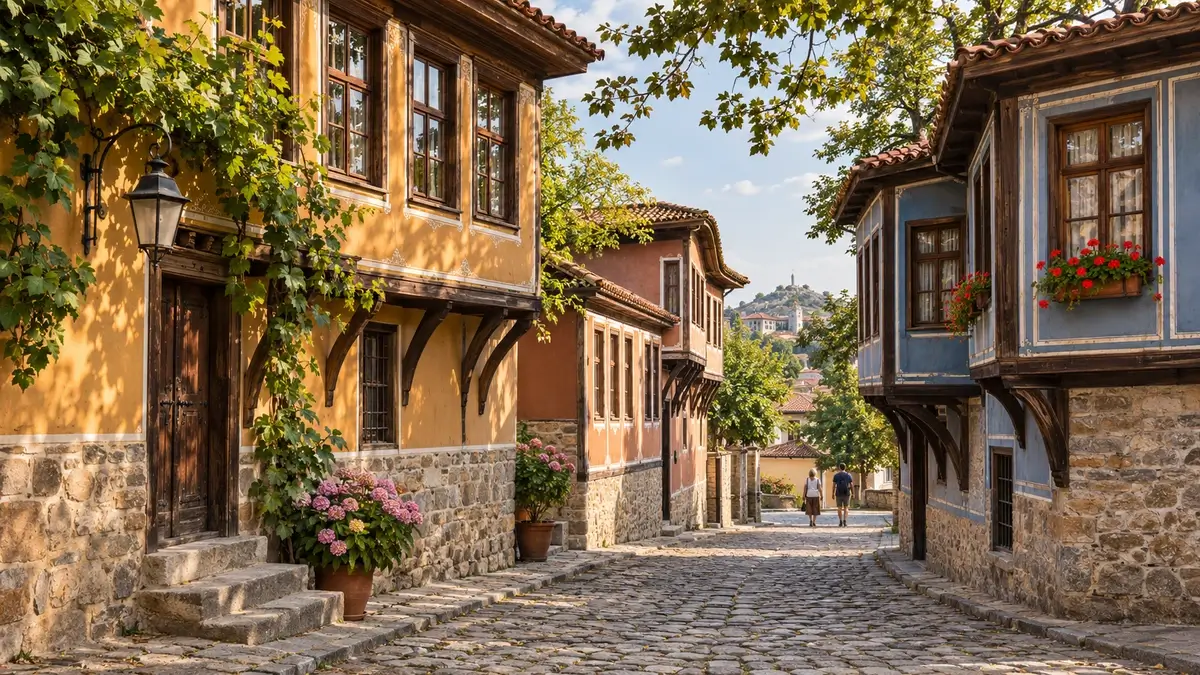
Plovdiv has paid parking zones in central areas, with rules shown on local signs. Check the sign nearest your space before leaving the car, because payment methods, hours and permitted parking duration can change.
If you are staying overnight, ask your accommodation about parking before arrival. A hotel space or nearby paid car park is usually easier than circling the centre with luggage. For sightseeing, it can be more relaxed to park slightly outside the most historic streets and walk in.
Do not park on pavements, across driveways, at junction corners or in spaces marked for residents, taxis, deliveries or people with disabilities unless you are clearly allowed to do so. Enforcement in central areas can be active, and a badly chosen parking spot can waste more time than using a paid car park.
Is Sofia to Plovdiv a good day trip by car?
Yes, Sofia to Plovdiv works well as a day trip by car. The driving time is short enough to leave Sofia in the morning, spend several hours in Plovdiv and return the same evening.
A car is especially useful if you want flexibility beyond the city centre. You can combine Plovdiv with nearby stops, continue to surrounding villages, or return at a time that suits you rather than working around train or bus schedules.
If your plan is only to visit central Plovdiv, start early and park once. The main sights are best explored on foot, particularly the Old Town’s cobbled streets and the pedestrian centre. Driving between central sights is usually unnecessary and can be slower than walking.
Useful stops and detours on the way
For the fastest journey, stay on the A1 and do not detour. If you have more time, you can break the drive with a coffee stop at a motorway service area or leave the route for a short visit to a town along the corridor.
Pazardzhik is a possible stop between Sofia and Plovdiv, though it is not necessary for a simple transfer. Ihtiman is closer to Sofia and can be useful if you want a quick break early in the drive.
Once in Plovdiv, popular short onward drives include the area around Asenovgrad or countryside south of the city. If you plan to add these, check your route separately, as smaller roads can be slower and more affected by local traffic or weather.
Winter and bad-weather tips
In winter, check the weather forecast before setting off. Sofia, the motorway approaches and exposed sections of the route can experience fog, snow or icy patches.
Rental cars should be suitable for the season, but if you are travelling in colder months, ask about winter equipment before pick-up. Leave extra space from the vehicle ahead, avoid sudden steering and braking, and be cautious on bridges and shaded areas where ice can linger.
Fog can be a bigger issue than snow on some days. Use dipped headlights, reduce speed and avoid following the lights of the car ahead too closely. If visibility becomes poor, stop only in a safe place such as a service area, not on the hard shoulder unless it is an emergency.
Before you leave Sofia: quick checklist
- Confirm the rental car has a valid Bulgarian e-vignette.
- Set your navigation to the exact address in Plovdiv, not only “Plovdiv”.
- Check traffic leaving Sofia, especially on weekdays and Fridays.
- Start with enough fuel for the round trip or plan a service-area stop.
- Keep headlights on during the day.
- Check parking options near your destination before arriving.
- Carry your driving licence, rental documents and ID or passport.
FAQ
How long is the drive from Sofia to Plovdiv?
The drive usually takes about 1 hour 30 minutes to 2 hours. Add extra time during Sofia rush hour, holiday traffic, roadworks or winter weather.
What is the best Sofia to Plovdiv route?
The best route is the A1 Trakia motorway. It is the fastest and simplest road between the two cities and is the standard route for rental car travellers.
Does a rental car need a vignette in Bulgaria?
Yes. Cars using Bulgarian motorways and national roads need a valid e-vignette. For a rental car, confirm with the provider that the vignette is active for that vehicle’s number plate.
Is it difficult to drive in Plovdiv city centre?
Driving into Plovdiv is not difficult, but parking and narrow central streets can be challenging. Use a paid car park or hotel parking if you are staying near the Old Town or pedestrian centre.
Can I do Sofia to Plovdiv as a day trip by car?
Yes. The route is short enough for a comfortable day trip, especially if you leave Sofia early and park once in Plovdiv before exploring the centre on foot.

Elena writes about travel and getting around Bulgaria for Rentiago, with a focus on destination guides, road trip routes, and local transport tips. Her articles help travelers plan where to go, how to get there, and what to expect along the way.
View profile →